Is my tree protected?
In England, trees can be legally protected in three main ways. If any of them apply, you need the council’s consent (or must give notice) before carrying out most work — and the penalties for getting it wrong can be heavy fines.
- Tree Preservation Order (TPO) — made by the local planning authority (Bolton Council or Bury Council) to protect individual trees, groups or woodlands.
- Conservation area — trees in a conservation area have automatic protection.
- Planning conditions — trees retained as part of a planning permission are often protected by conditions.
Work to a tree with a TPO
You normally need written consent from the council to cut down, top, lop, uproot or wilfully damage a protected tree. That includes pruning and crown reductions. Applications are made to the council (usually through the Planning Portal) and are generally decided within eight weeks. We can prepare the description of works for you and carry them out once consent is granted.
Trees in a conservation area
If a tree in a conservation area has a trunk diameter of 75mm or more, measured 1.5 metres above the ground, you must give the council six weeks’ written notice (a “section 211 notice”) before doing work. The council can then decide whether to protect it with a TPO. Bolton has a number of conservation areas, including parts of the town centre and several of its historic villages.
Dead or dangerous trees
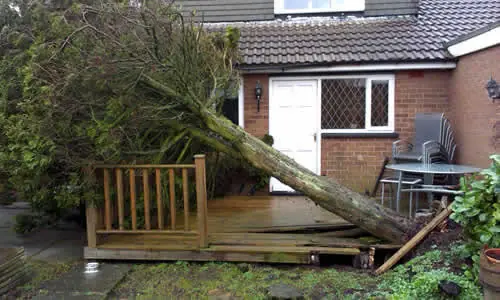
There are exceptions for trees that are dead or present an immediate risk of serious harm, but you must still give the council notice — usually five working days for dead trees, or as soon as possible afterwards in a genuine emergency. Keep photographs as evidence. When a protected Scots pine in Bradshaw was damaged by high winds, we worked with the owner and the council so it could be removed lawfully and safely.
How to check
- Search Bolton Council’s or Bury Council’s website for their TPO and conservation-area information, or contact the council’s tree officer.
- Check the deeds or planning history if your house was built recently.
- Or simply ask us — we check before quoting for any work.
This page is general guidance, not legal advice. Rules can change; always confirm with the council before working on a tree you think may be protected.
Wildlife
Separately from TPOs, it is an offence under the Wildlife and Countryside Act 1981 to damage or destroy an active bird’s nest, and bats and their roosts are strictly protected. We check trees and hedges for nesting birds and signs of bats before starting work.